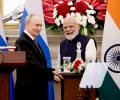
India and Russia have solidified a five-year plan to enhance their economic and trade partnership, while also addressing the ongoing conflict in Ukraine and the threat of terrorism.

Prime Minister Narendra Modi on Saturday met United States Ambassador-designate to India Sergio Gor and said he was confident that India-US ties will further strengthen during his tenure.

The two countries also signed a 'Memorandum of Agreement regarding the Assignment of Liaison Officers', which will facilitate the posting of one military officer from each country with the military of the other.

'The aim is to have curated datasets that create cultural and historical nuances that help us make our models understand these better.'
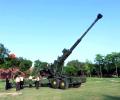
The Indian government outlines its futuristic defence programme, Sudarshan Chakra Mission, focusing on indigenous development, predictive technologies, and targeted counter-action systems to enhance national security.

The ministries of Road Transport & Highways and Railways have exceeded the national average capital expenditure (capex) by spending 63 per cent and 57 per cent of Budget estimates (BE), respectively, in the first half of 2025-26 (FY26). The total capital expenditure for April-September of FY26 stood at 52 per cent of the BE, according to the latest data by the Controller General of Accounts (CGA).

The Indian armed forces will conduct an exercise to test the capabilities of its drones and counter-drone systems. The exercise, named 'Cold Start', will involve all three services and will take place in Madhya Pradesh.
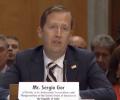
Gor underlined that President Trump has a "deep friendship" with Prime Minister Narendra Modi, and that is something that is unique.

Senior citizens are particularly vulnerable due to their high savings, trust in authorities, and limited familiarity with online frauds.

'When global politics has some intervention on the core software one uses, and if you are cut off from your own data in critical workflows, sovereignty is no longer optional. It becomes a necessity.'
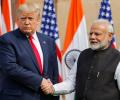
The China threat continues to resonate in the strategic partnership between India and the USA, points out Rup Narayan Das.

'The US values its relationship with India and under the strong leadership of President Donald J Trump and Prime Minister Modi, I am optimistic about the days ahead for both of our nations.'

Prime Minister Narendra Modi and Brazilian President Luiz Incio Lula da Silva agreed to enhance cooperation in trade, technology, energy, defence, agriculture, health, and people-to-people ties.
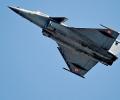
The mega procurement project has been approved by the Cabinet Committee on Security chaired by Prime Minister Narendra Modi, they said.
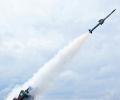
'There are only a few countries in the world that have deployed combat-ready laser systems.'

The deal is expected to help HAL to get its complete requirement of 212 GE-404 engines in continuity, avoiding any types of delays in engine supplies.
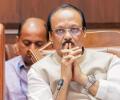
Maharashtra Deputy Chief Minister Ajit Pawar faced criticism after questioning 'who Parrikar?' when a woman suggested he emulate the late Goa CM Manohar Parrikar's surprise visits to address civic issues.
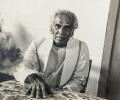
What appeared to be a generous act of friendship was, in truth, a manoeuvre within a much larger strategic game. The United States used the 1962 war not just to aid India but to test how far it could be pulled into the Western fold, points out Dr Kumar.

'What we need to watch is how Saudi Arabia's financial assistance will be used by Pakistan. If the funds go to build their military hardware and operations, it should worry us.'

The defence minister also announced that India has taken up the challenge of developing a powerful indigenous aero-engine, adding that preparations for this critical project are now almost complete and the work will soon be visible.
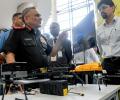
Chief of Defence Staff General Anil Chauhan emphasizes the importance of self-reliance in Unmanned Aerial Vehicles (UAVs) and Counter-Unmanned Aerial Systems (C-UAS) for India, citing recent global conflicts and Operation Sindoor as examples of their strategic importance.

'If 138 soldiers have been given a gallantry award as 'shaheed' (by Pakistan) for Operation Sindoor, how many would have been the actual casualties. This decides who won.

'While the President has been critical of India, he has gone out of his way to compliment PM Modi. They have an incredible relationship.'

'The way the attacks are coming has become much stronger and much wider because of AI.'

Chief of Defence Staff Gen Anil Chauhan asserted that the armed forces are free of nepotism and urged children to join to serve the nation. He also spoke about Operation Sindoor and the use of technology in warfare.
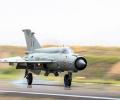
The MiG-21 episode demonstrates that procurement is always strategic.
Choices about what aircraft to acquire, who builds them, who supplies the spares, who trains the pilots and technicians are decisions with political consequences lasting for decades.
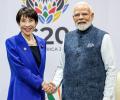
If they act now, they can reshape the strategic map of Asia without firing a shot. If they wait, the next opportunity will come only after a serious Taiwan Strait incident -- by which time the price will be far higher, and the room for boldness far smaller -- the opportunity may well be lost by then. The question is no longer whether this can or should be done, points out Varun Arya.

Modi inaugurated the Semicon India 2025 in Delhi, in the presence of Chief Minister Rekha Gupta, and Union Minister of Commerce and Industry Jitin Prasada.

India successfully test-fired the newly-developed tactical missile Pralay, capable of carrying conventional warheads, from APJ Abdul Kalam island off the coast of Odisha. The missile, developed by DRDO, has a range of 150 to 500 km and a payload capacity of 500-1,000 kg.

China calls the shoal Huangyan Dao. China has already deployed some of its biggest CCG vessels in the area to assert its claims.
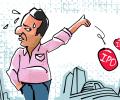
'The primary market's rhythm mirrors investor confidence. While sentiment may appear cautious, it reflects maturity, not weakness.'

RMG firms Dream11, Games24x7, Gameskraft and MPL lost unicorn status after the gaming ban while fintech players led 11 new unicorns added in 2025.

Chief of Defence Staff Gen Anil Chauhan identifies China border dispute as India's biggest national security challenge, followed by Pakistan's proxy war. He also highlighted regional instability, future warfare scenarios, and dealing with nuclear-armed adversaries as major concerns.

...on par with oil, power, and defence, and to restrict its storage under foreign control.
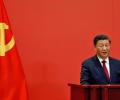
The Chinese Communist Party reaffirmed President Xi Jinping's leadership and backed a major purge of top military officials during a key meeting. The meeting also endorsed a new 5-year plan focused on domestic market resilience and self-reliance.

A Russian defence expert says the reported sale of RD-93 engines to Pakistan for integration into the JF-17 will actually benefit India, dismissing criticism of the Indian government by the opposition.

Two modules published by the NCERT, Swadeshi: Vocal for Local (for middle stage) and Swadeshi: For a Self-Reliant India (for secondary stage), carry excerpts from the prime minister's Independence Day address in which he stressed that self-reliance would drive India's journey towards a Viksit Bharat.
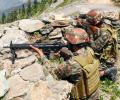
For the first time, the Data Security Council of India assembled a joint task force to source threat intelligence at the origin and ensure coordinated action across the cybersecurity spectrum.

'10 million Indians are currently living with dementia, and the number is expected to double by 2036.'
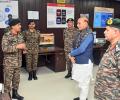
Defence Minister Rajnath Singh announced that India's defence exports have crossed a record Rs 21,000 crore, a significant jump from Rs 2,000 crore a decade ago. He set a target of achieving defence exports of Rs 50,000 crore by 2029. Singh highlighted the importance of mastering frontier technologies in the face of evolving warfare, emphasizing the role of military training centers in preparing soldiers for future challenges. He also underscored the government's commitment to strengthening integration and jointness among the three services, aiming to enhance the armed forces' ability to face challenges together.
